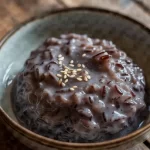
I’m sharing my Khanom Thuai, a classic from Thai Sweets that layers a pandan-infused base with a salty coconut cream topping, served in tiny cups and naturally gluten-free and dairy-free.

I fell for khanom thuai the first time I tried it; those tiny cups looked harmless but the pandan juice green layer topped with salty coconut cream stopped me cold. It feels like one of those Thai Sweets that’s quietly clever, all perfume and texture, not loud but impossible to forget.
I keep trying to explain the mouthfeel, like a gentle wobble that melts into a cloud, and I always end up wanting another. If you like small discoveries in Southeast Asian Food, this little custard is a perfect teaser, short, fragrant, and full of surprises you’ll wanna share.
Ingredients

- Rice flour: Gives body and mild chewiness, mostly carbs with a little fiber, gluten free.
- Tapioca starch: Adds springy stretch and shine, almost pure carbs, no real protein or fiber.
- Palm sugar: Adds deep caramel sweetness, some minerals but still high in sugar, use sparingly.
- Coconut milk: Creamy fat rich coconut flavor, gives richness and mouthfeel, provides calories and some minerals.
- Pandan juice: Bright grassy aroma, adds color and fragrance, tiny amounts of vitamins, mostly for scent.
- Water: Thins batter, hydrates starches and controls texture, no calories but essential for structure.
- Salt: Enhances sweetness and depth, tiny mineral boost, use sparingly or flavors will be off.
Ingredient Quantities
- Pandan layer
- 1 cup (140 g) rice flour
- 1/4 cup (30 g) tapioca starch
- 3/4 cup (150 g) palm sugar or light brown sugar, grated
- 1 cup (240 ml) canned coconut milk
- 1 1/2 cups (360 ml) water
- 1/3 cup (80 ml) pandan juice from about 6-8 pandan leaves or 1 tbsp pandan extract
- 1/4 tsp fine salt
- Coconut topping
- 1 cup (240 ml) coconut cream or the thick part of canned coconut milk
- 2 tbsp rice flour (or 1 tbsp rice flour + 1 tbsp tapioca starch if you like)
- 2 tbsp granulated sugar
- 1/2 tsp fine salt
- extra toasted sesame seeds or a tiny pandan leaf for garnish, optional
How to Make this
1. If using pandan leaves, wash and roughly chop 6 to 8 leaves, blend with about 1/3 cup (80 ml) water until smooth then squeeze through a fine sieve or cheesecloth to get ~1/3 cup pandan juice; if you have pandan extract just measure 1 tbsp and skip the blending.
2. In a bowl whisk together 1 cup (140 g) rice flour, 1/4 cup (30 g) tapioca starch, 3/4 cup (150 g) grated palm or light brown sugar and 1/4 tsp fine salt so the dry ingredients are evenly mixed.
3. Add 1 cup (240 ml) canned coconut milk, 1 1/2 cups (360 ml) water and the pandan juice or extract to the dry mix, stir until smooth, then strain the batter through a fine sieve into a pouring jug to remove any lumps or fibery bits.
4. Lightly oil small khanom thuai cups or a mini muffin tin with a neutral oil so the custards release easier later.
5. Bring the batter to a gentle simmer in a saucepan just long enough to fully dissolve the palm sugar, stirring constantly, do not boil; once sugar is dissolved, remove from heat and pour the batter into the prepared cups about 3/4 full.
6. Steam the cups over simmering water in a steamer basket, cover the lid with a clean kitchen towel to catch drips, and steam until the pandan layer is set and springs back lightly when touched, about 12 to 15 minutes depending on cup size.
7. While the pandan layer steams make the topping by whisking 1 cup (240 ml) coconut cream, 2 tbsp rice flour (or 1 tbsp rice flour + 1 tbsp tapioca starch), 2 tbsp granulated sugar and 1/2 tsp fine salt in a small saucepan; cook over low heat, stirring constantly, until the mixture thickens to a pourable custard that coats the back of a spoon, avoid boiling or it can split.
8. When the pandan bases are set, spoon the coconut topping over each one (a thin layer, about 1/4 inch), then return the cups to the steamer for 2 to 3 minutes just to set the top, or you can spoon on the warm topping and let them rest to set at room temp.
9. Let the little cups cool to room temperature (they firm up more as they cool), then chill if you like; to unmold run a thin knife around the edge or serve straight in the cups. Garnish with toasted sesame seeds or a tiny pandan leaf.
10. Store in the fridge for up to 2 to 3 days, keep covered so the coconut layer doesnt dry out, and re-chill before serving for best texture.
Equipment Needed
1. Blender or stick blender or small food processor (for pandan leaves)
2. Fine mesh sieve or cheesecloth (to strain pandan juice and the batter)
3. Mixing bowls (one large for dry mix, one medium for wet)
4. Whisk and rubber spatula for stirring and scraping
5. Measuring cups, spoons and a kitchen scale for accuracy
6. Saucepan (medium) to gently heat the batter and another small saucepan for the coconut topping, or use the same one if careful
7. Steamer basket with a lid and a clean kitchen towel to catch drips
8. Khanom thuai cups or a mini muffin tin, plus a pastry brush or oiled paper towel to grease them, and a small ladle or pouring jug to fill the cups
FAQ
Thai Coconut Custard Recipe Substitutions and Variations
- Rice flour
- Glutinous (sweet) rice flour — use 1:1, gives a chewier, stickier custard (you’ll get a different texture but still good)
- Cornstarch — use about 3/4 cup for 1 cup rice flour, makes a smoother, slightly less dense custard
- All purpose flour — 1:1 swap, but expect a more cakey, less translucent result; mix 2 tbsp cornstarch in if you want a bit more tenderness
- Tapioca starch
- Cornstarch — 1:1, thickens fast so stir constantly and cook gently
- Arrowroot powder — 1:1, gives a glossy, neutral finish and is good for refrigeration
- Potato starch — 1:1, works well but avoid prolonged high heat or it can break down
- Palm sugar / light brown sugar
- Packed light brown sugar — 1:1, closest in sweetness and molasses flavor
- Coconut sugar — 1:1, slightly less sweet with deeper caramel notes
- Granulated sugar + molasses — per cup use 1 cup granulated + 1 tbsp molasses to mimic brown/palm sugar flavor
- Pandan juice
- Pandan extract — use sparingly, start with 1 tbsp in place of 1/3 cup juice since extract is concentrated
- Vanilla + green food color — no pandan flavor but gives pleasant aroma and the green look
- Matcha (green tea) — about 1/2 tsp dissolved in warm water for green color and a grassy note, but it’s not pandan
Pro Tips
– Strain everything. Even if you blended pandan leaves, squeeze and sieve the juice and strain the batter and topping before pouring. Those tiny fibers and lumps are what make the texture stringy or grainy later.
– Keep steam gentle and steady. A simmering pot, not a rolling boil, prevents water splashes and collapsing puddles. Wrap the lid with a towel and leave a little space between cups so hot steam circulates evenly.
– Don’t pour piping hot coconut topping right away. Let it cool a bit so it sits on top instead of bleeding into the pandan layer, but not so cool that it firms up and won’t spread. If the topping is too thin, add a bit more rice flour or tapioca and cook until it just coats the spoon.
– Chill to firm up and store smart. The cups set more as they cool, so refrigerate before unmolding if you want clean edges. Keep plastic wrap touching the coconut surface or cover the tray so the top does not dry out in the fridge.

Thai Coconut Custard Recipe
I’m sharing my Khanom Thuai, a classic from Thai Sweets that layers a pandan-infused base with a salty coconut cream topping, served in tiny cups and naturally gluten-free and dairy-free.
9
servings
301
kcal
Equipment: 1. Blender or stick blender or small food processor (for pandan leaves)
2. Fine mesh sieve or cheesecloth (to strain pandan juice and the batter)
3. Mixing bowls (one large for dry mix, one medium for wet)
4. Whisk and rubber spatula for stirring and scraping
5. Measuring cups, spoons and a kitchen scale for accuracy
6. Saucepan (medium) to gently heat the batter and another small saucepan for the coconut topping, or use the same one if careful
7. Steamer basket with a lid and a clean kitchen towel to catch drips
8. Khanom thuai cups or a mini muffin tin, plus a pastry brush or oiled paper towel to grease them, and a small ladle or pouring jug to fill the cups
Ingredients
-
Pandan layer
-
1 cup (140 g) rice flour
-
1/4 cup (30 g) tapioca starch
-
3/4 cup (150 g) palm sugar or light brown sugar, grated
-
1 cup (240 ml) canned coconut milk
-
1 1/2 cups (360 ml) water
-
1/3 cup (80 ml) pandan juice from about 6-8 pandan leaves or 1 tbsp pandan extract
-
1/4 tsp fine salt
-
Coconut topping
-
1 cup (240 ml) coconut cream or the thick part of canned coconut milk
-
2 tbsp rice flour (or 1 tbsp rice flour + 1 tbsp tapioca starch if you like)
-
2 tbsp granulated sugar
-
1/2 tsp fine salt
-
extra toasted sesame seeds or a tiny pandan leaf for garnish, optional
Directions
- If using pandan leaves, wash and roughly chop 6 to 8 leaves, blend with about 1/3 cup (80 ml) water until smooth then squeeze through a fine sieve or cheesecloth to get ~1/3 cup pandan juice; if you have pandan extract just measure 1 tbsp and skip the blending.
- In a bowl whisk together 1 cup (140 g) rice flour, 1/4 cup (30 g) tapioca starch, 3/4 cup (150 g) grated palm or light brown sugar and 1/4 tsp fine salt so the dry ingredients are evenly mixed.
- Add 1 cup (240 ml) canned coconut milk, 1 1/2 cups (360 ml) water and the pandan juice or extract to the dry mix, stir until smooth, then strain the batter through a fine sieve into a pouring jug to remove any lumps or fibery bits.
- Lightly oil small khanom thuai cups or a mini muffin tin with a neutral oil so the custards release easier later.
- Bring the batter to a gentle simmer in a saucepan just long enough to fully dissolve the palm sugar, stirring constantly, do not boil; once sugar is dissolved, remove from heat and pour the batter into the prepared cups about 3/4 full.
- Steam the cups over simmering water in a steamer basket, cover the lid with a clean kitchen towel to catch drips, and steam until the pandan layer is set and springs back lightly when touched, about 12 to 15 minutes depending on cup size.
- While the pandan layer steams make the topping by whisking 1 cup (240 ml) coconut cream, 2 tbsp rice flour (or 1 tbsp rice flour + 1 tbsp tapioca starch), 2 tbsp granulated sugar and 1/2 tsp fine salt in a small saucepan; cook over low heat, stirring constantly, until the mixture thickens to a pourable custard that coats the back of a spoon, avoid boiling or it can split.
- When the pandan bases are set, spoon the coconut topping over each one (a thin layer, about 1/4 inch), then return the cups to the steamer for 2 to 3 minutes just to set the top, or you can spoon on the warm topping and let them rest to set at room temp.
- Let the little cups cool to room temperature (they firm up more as they cool), then chill if you like; to unmold run a thin knife around the edge or serve straight in the cups. Garnish with toasted sesame seeds or a tiny pandan leaf.
- Store in the fridge for up to 2 to 3 days, keep covered so the coconut layer doesnt dry out, and re-chill before serving for best texture.
Notes
- Below you’ll find my best estimate of this recipe’s nutrition facts. Treat the numbers as a guide rather than a rule—great food should nourish both body and spirit. Figures are approximate, and the website owner assumes no liability for any inaccuracies in this recipe.
Nutrition Facts
- Serving Size: 142g
- Total number of serves: 9
- Calories: 301kcal
- Fat: 15.2g
- Saturated Fat: 13.3g
- Trans Fat: 0g
- Polyunsaturated: 0.2g
- Monounsaturated: 1.1g
- Cholesterol: 0mg
- Sodium: 202mg
- Potassium: 143mg
- Carbohydrates: 38g
- Fiber: 0.8g
- Sugar: 23g
- Protein: 2.2g
- Vitamin A: 0IU
- Vitamin C: 0mg
- Calcium: 12mg
- Iron: 0.5mg






![Thai Coconut Soup [Coconut Milk Soup] Recipe](https://bangkokbowl.com/wp-content/uploads/2025/06/Collage_Thai-Coconut-Soup-Coconut-Milk-Soup-_1751036922-150x150.webp)