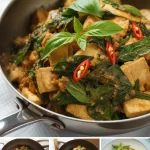
I just cooked a Thai Chicken And Rice that tastes like a restaurant steal and I’m not kidding when I say you’ll want seconds.

I’m obsessed with this Thai red curry. I love how the creamy coconut sauce slathers every bite, brightened by red curry paste and a squeeze of fresh lime juice that actually wakes it up.
I crave the tender bite of Red Curry Chicken Thighs and the snap of a red pepper in the sauce. When I eat it over jasmine, it becomes my go-to Thai Chicken And Rice, simple and loud.
But it’s never delicate; it’s bold, a little messy, and totally satisfying. One spoon and I’m already planning leftovers.
I want seconds now, not later. No shame.
Honestly none.
Ingredients

- Chicken thighs: juicy protein, stays tender and soaks up curry goodness.
- Red curry paste: spicy, aromatic punch that drives the whole dish.
- Neutral oil: helps bloom the paste, keeps things from sticking.
- Coconut milk: rich, creamy base that cools the heat a bit.
- Shallots/onion: sweet, soft layers that add depth and mild crunch.
- Garlic: sharp, warm note that makes it taste homemade.
- Ginger/galangal: bright, slightly peppery zing that cuts richness.
- Fish sauce: salty, savory umami that makes it taste Thai.
- Palm/brown sugar: balances heat with gentle sweet caramel tones.
- Kaffir lime leaves: fragrant citrus lift, basically perfume for the curry.
- Red bell pepper: sweet crunch and vibrant color, nice contrast.
- Bamboo shoots: classic texture, subtle earthy crunch if you want tradition.
- Lemongrass: citrusy stalk that adds fresh, lemony backbone.
- Chicken broth/water: thins sauce slightly, keeps curry saucy for rice.
- Thai basil: fresh, peppery-herbal finish you’ll want lots of.
- Lime juice: bright acidity that wakes everything up at the end.
- Salt and pepper: simple seasoning to taste, don’t skip it.
- Finishing oil: a glossy sheen and gentle flavor boost if needed.
- Steamed jasmine rice: fragrant, sticky partner that soaks up the sauce.
Ingredient Quantities
- 1 1/2 pounds (700 g) boneless skinless chicken thighs, cut into bite sized pieces
- 2 tablespoons red curry paste (store bought or homemade)
- 2 tablespoons neutral oil like vegetable or peanut oil
- 2 cans (14 oz / 400 ml each) full fat coconut milk, shaken well
- 2 shallots, thinly sliced or 1 small yellow onion, thinly sliced
- 3 garlic cloves, minced
- 1 tablespoon fresh ginger, grated or 1 teaspoon galangal paste
- 1 tablespoon fish sauce (to taste)
- 1 to 2 teaspoons palm sugar or light brown sugar, to taste
- 3 to 4 kaffir lime leaves, torn (or 1 teaspoon lime zest if you cant get leaves)
- 1 red bell pepper, thinly sliced
- 1 cup bamboo shoots, drained (optional but traditional)
- 1 stalk lemongrass, tough outer layers removed and finely smashed and sliced (optional)
- 1/2 cup low sodium chicken broth or water
- Handful fresh Thai basil leaves (or sweet basil), plus extra for garnish
- Fresh lime juice from 1 lime (or more to taste)
- Salt and freshly ground black pepper, to taste
- 1 to 2 teaspoons vegetable or coconut oil for finishing if needed
- Steamed jasmine rice or rice noodles, for serving
How to Make this
1. Pat chicken thighs dry and cut into bite sized pieces, season lightly with salt and pepper; this helps them brown and not steam.
2. Heat 2 tablespoons neutral oil in a large skillet or wok over medium high heat. When hot, add shallots, smashed lemongrass pieces and sauté until fragrant and just soft, about 2 minutes.
3. Add garlic, ginger (or galangal paste) and red curry paste; stir constantly for 30 to 60 seconds to bloom the spices and get rid of raw paste taste. If paste sticks, add a splash of coconut milk to loosen it.
4. Pour in one can of coconut milk and 1/2 cup chicken broth or water, stir to combine and bring to a gentle simmer. Scrape any browned bits from the bottom of the pan.
5. Add the chicken pieces, kaffir lime leaves (or lime zest), bamboo shoots and sliced red bell pepper. Reduce heat to medium low and simmer uncovered for 8 to 12 minutes, until chicken is cooked through.
6. Shake the second can of coconut milk and add it now for a richer, creamier sauce. Stir in fish sauce and palm sugar, taste and adjust: you want a balance of salty, sweet and spicy.
7. If sauce is too thin, simmer a few more minutes to thicken; if too thick, add a splash more broth or coconut milk. Finish with a teaspoon or two of oil if the curry looks dull, it gives a glossy restaurant look.
8. Stir in most of the Thai basil leaves and squeeze in fresh lime juice from one lime; taste and add more fish sauce, sugar or lime as needed. Remove torn lemongrass pieces and kaffir leaf stems if you left big bits behind.
9. Serve hot over steamed jasmine rice or rice noodles, garnish with extra basil and a lime wedge. Leftovers taste even better the next day once flavors meld.
10. Quick tips: use full fat coconut milk for creaminess, brown the paste early to deepen flavor, and don’t skip kaffir lime leaves or basil if you can find them they make a huge difference.
Equipment Needed
1. Large skillet or wok (for browning and simmering the curry)
2. Cutting board and a sharp chef knife (for chicken, shallots, peppers, lemongrass)
3. Measuring spoons and 1/2 cup measuring cup (for curry paste, oils, broth, fish sauce)
4. Can opener (for the coconut milk and bamboo shoots)
5. Heatproof spatula or wooden spoon (to stir and scrape up browned bits)
6. Tongs or a slotted spoon (to add and lift chicken pieces)
7. Small bowls or ramekins (mise en place for garlic, ginger, sugar, fish sauce, basil)
8. Citrus juicer or fork and small bowl (for squeezing the lime over the finished curry)
FAQ
Authentic Thai Red Curry Chicken – Spicy & Creamy Recipe Substitutions and Variations
- Chicken thighs: use boneless chicken breast (cooks faster, watch for dryness) or firm tofu for a vegetarian swap (press well, brown first)
- Red curry paste: swap with green curry paste for a brighter herbier heat, or use 1 1/2 tablespoons store bought chili paste plus 1/2 tablespoon Thai curry powder if youre out of paste
- Full fat coconut milk: can use light coconut milk thinned with 1/3 cup coconut cream or regular milk for fewer calories, or use one can coconut cream plus equal parts water for same richness
- Fish sauce: replace with soy sauce or tamari for a vegetarian option (add a teaspoon of miso or a squeeze of lime to bump up the umami)
Pro Tips
1) Brown the chicken in batches so it actually gets color instead of stewing. Don’t overcrowd the pan or the pieces will steam and you lose that caramelized flavor.
2) Bloom the curry paste in oil with the aromatics for at least 30 seconds, and if it starts to stick add a splash of coconut milk right away. That little step removes the raw paste taste and gives a deeper color.
3) Shake the coconut milk cans well and add one can later for richness. If the sauce looks dull at the end stir in a teaspoon or two of neutral oil for a glossy finish, it really makes it look restaurant-level.
4) Add basil and lime at the very end and remove any big lemongrass or kaffir bits before serving. The heat will destroy fresh herbs fast so toss them in last for the best aroma.
5) Taste constantly and balance salt, sweet and acid. Fish sauce, palm sugar and fresh lime juice are your control knobs; tweak small amounts until the curry sings, then let it sit a few minutes so the flavors meld.

Authentic Thai Red Curry Chicken – Spicy & Creamy Recipe
I just cooked a Thai Chicken And Rice that tastes like a restaurant steal and I’m not kidding when I say you’ll want seconds.
4
servings
842
kcal
Equipment: 1. Large skillet or wok (for browning and simmering the curry)
2. Cutting board and a sharp chef knife (for chicken, shallots, peppers, lemongrass)
3. Measuring spoons and 1/2 cup measuring cup (for curry paste, oils, broth, fish sauce)
4. Can opener (for the coconut milk and bamboo shoots)
5. Heatproof spatula or wooden spoon (to stir and scrape up browned bits)
6. Tongs or a slotted spoon (to add and lift chicken pieces)
7. Small bowls or ramekins (mise en place for garlic, ginger, sugar, fish sauce, basil)
8. Citrus juicer or fork and small bowl (for squeezing the lime over the finished curry)
Ingredients
-
1 1/2 pounds (700 g) boneless skinless chicken thighs, cut into bite sized pieces
-
2 tablespoons red curry paste (store bought or homemade)
-
2 tablespoons neutral oil like vegetable or peanut oil
-
2 cans (14 oz / 400 ml each) full fat coconut milk, shaken well
-
2 shallots, thinly sliced or 1 small yellow onion, thinly sliced
-
3 garlic cloves, minced
-
1 tablespoon fresh ginger, grated or 1 teaspoon galangal paste
-
1 tablespoon fish sauce (to taste)
-
1 to 2 teaspoons palm sugar or light brown sugar, to taste
-
3 to 4 kaffir lime leaves, torn (or 1 teaspoon lime zest if you cant get leaves)
-
1 red bell pepper, thinly sliced
-
1 cup bamboo shoots, drained (optional but traditional)
-
1 stalk lemongrass, tough outer layers removed and finely smashed and sliced (optional)
-
1/2 cup low sodium chicken broth or water
-
Handful fresh Thai basil leaves (or sweet basil), plus extra for garnish
-
Fresh lime juice from 1 lime (or more to taste)
-
Salt and freshly ground black pepper, to taste
-
1 to 2 teaspoons vegetable or coconut oil for finishing if needed
-
Steamed jasmine rice or rice noodles, for serving
Directions
- Pat chicken thighs dry and cut into bite sized pieces, season lightly with salt and pepper; this helps them brown and not steam.
- Heat 2 tablespoons neutral oil in a large skillet or wok over medium high heat. When hot, add shallots, smashed lemongrass pieces and sauté until fragrant and just soft, about 2 minutes.
- Add garlic, ginger (or galangal paste) and red curry paste; stir constantly for 30 to 60 seconds to bloom the spices and get rid of raw paste taste. If paste sticks, add a splash of coconut milk to loosen it.
- Pour in one can of coconut milk and 1/2 cup chicken broth or water, stir to combine and bring to a gentle simmer. Scrape any browned bits from the bottom of the pan.
- Add the chicken pieces, kaffir lime leaves (or lime zest), bamboo shoots and sliced red bell pepper. Reduce heat to medium low and simmer uncovered for 8 to 12 minutes, until chicken is cooked through.
- Shake the second can of coconut milk and add it now for a richer, creamier sauce. Stir in fish sauce and palm sugar, taste and adjust: you want a balance of salty, sweet and spicy.
- If sauce is too thin, simmer a few more minutes to thicken; if too thick, add a splash more broth or coconut milk. Finish with a teaspoon or two of oil if the curry looks dull, it gives a glossy restaurant look.
- Stir in most of the Thai basil leaves and squeeze in fresh lime juice from one lime; taste and add more fish sauce, sugar or lime as needed. Remove torn lemongrass pieces and kaffir leaf stems if you left big bits behind.
- Serve hot over steamed jasmine rice or rice noodles, garnish with extra basil and a lime wedge. Leftovers taste even better the next day once flavors meld.
- Quick tips: use full fat coconut milk for creaminess, brown the paste early to deepen flavor, and don’t skip kaffir lime leaves or basil if you can find them they make a huge difference.
Notes
- Below you’ll find my best estimate of this recipe’s nutrition facts. Treat the numbers as a guide rather than a rule—great food should nourish both body and spirit. Figures are approximate, and the website owner assumes no liability for any inaccuracies in this recipe.
Nutrition Facts
- Serving Size: 455g
- Total number of serves: 4
- Calories: 842kcal
- Fat: 65.5g
- Saturated Fat: 47g
- Trans Fat: 0.3g
- Polyunsaturated: 5g
- Monounsaturated: 13.2g
- Cholesterol: 154mg
- Sodium: 550mg
- Potassium: 523mg
- Carbohydrates: 14.5g
- Fiber: 2g
- Sugar: 4g
- Protein: 46g
- Vitamin A: 1500IU
- Vitamin C: 30mg
- Calcium: 60mg
- Iron: 0.8mg



![Thai Coconut Soup [Coconut Milk Soup] Recipe](https://bangkokbowl.com/wp-content/uploads/2025/06/Collage_Thai-Coconut-Soup-Coconut-Milk-Soup-_1751036922-150x150.webp)